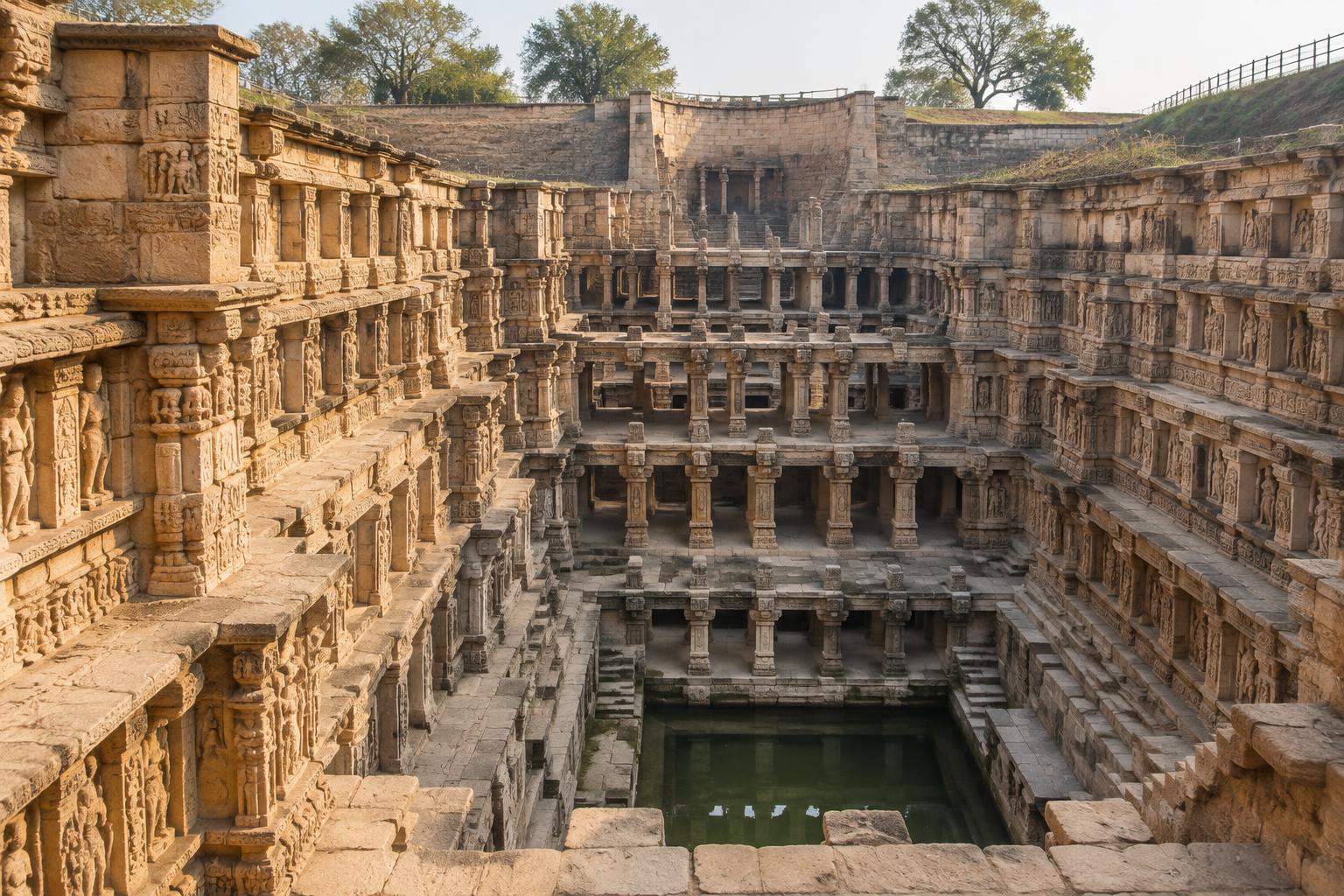
Rani-ki-Vav
Patan, Gujarat · 11th century
Illustrative reconstruction · generated for this archive prototype
Overview
Rani-ki-Vav is a monumental stepwell at Patan in Gujarat. Its descending sequence of terraces, pavilions and sculpted stonework leads toward a deep well shaft. The archive presents it as a documented example of water access shaped through architecture.
Historical Context
11th century. This prototype provides broad context only; detailed chronology requires source verification.
Water Management
The stepped descent enabled people to approach water as levels changed seasonally. The well was connected to the local groundwater system; access, shade and depth made the structure responsive to a dry climate.
Landscape & Ecology
Semi-arid alluvial plain. Demonstrates how a utilitarian water structure could also become a highly articulated civic and ceremonial space.
Architecture / Engineering
A long stepped corridor is articulated by pillared levels, landings and richly carved sandstone surfaces. Its underground form creates a gradual transition from the open landscape to the water source.
Community & Cultural Significance
Stepwells could support gathering, rest and ritual alongside practical water access. The sculptural programme at Rani-ki-Vav gives the structure exceptional cultural and architectural importance.
Modern Relevance
Offers lessons in climate-responsive public architecture and the cultural value of water infrastructure.
Conservation
Stone weathering, water conditions and visitor pressure require continued care. Digital documentation can preserve spatial, material and water-management knowledge while the physical site changes.