Skip to content
Digital archive · Group 7JalSanskriti

System taxonomy · six educational typologies

How India Learned to Live With Water

Stepwells, johads, traditional tanks, ahar-pyne, kuhls and khadin show how terrain, rainfall and community practice shaped distinct water strategies. These categories are a prototype teaching framework, not a complete taxonomy.

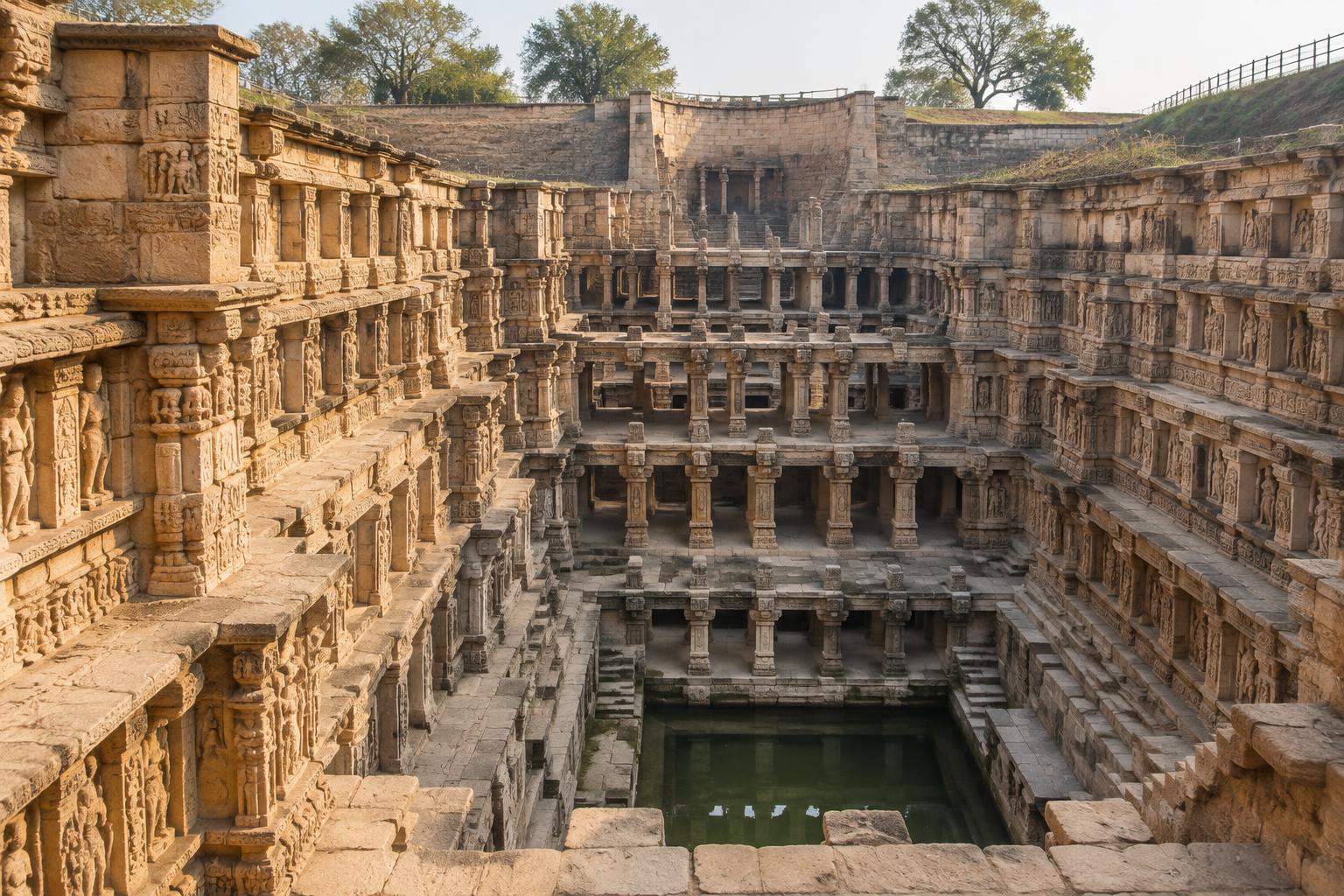
Illustrative view of a deep carved stone stepwell

Illustrative reconstruction · generated for this archive prototype

01 · West India

Rani-ki-Vav

Vertical access to groundwater through a descending architectural sequence.

Climate & landscapeSemi-arid alluvial plain · Semi-arid alluvial plain
Water sourceGroundwater and seasonal recharge
Main purposeWater storage & access
Construction / materialStone

How it works

Verticalaccesstogroundwaterthroughadescendingarchitecturalsequence.
Community dimension
Stepwells could support gathering, rest and ritual alongside practical water access. The sculptural programme at Rani-ki-Vav gives the structure exceptional cultural and architectural importance.
Modern relevance
Offers lessons in climate-responsive public architecture and the cultural value of water infrastructure.
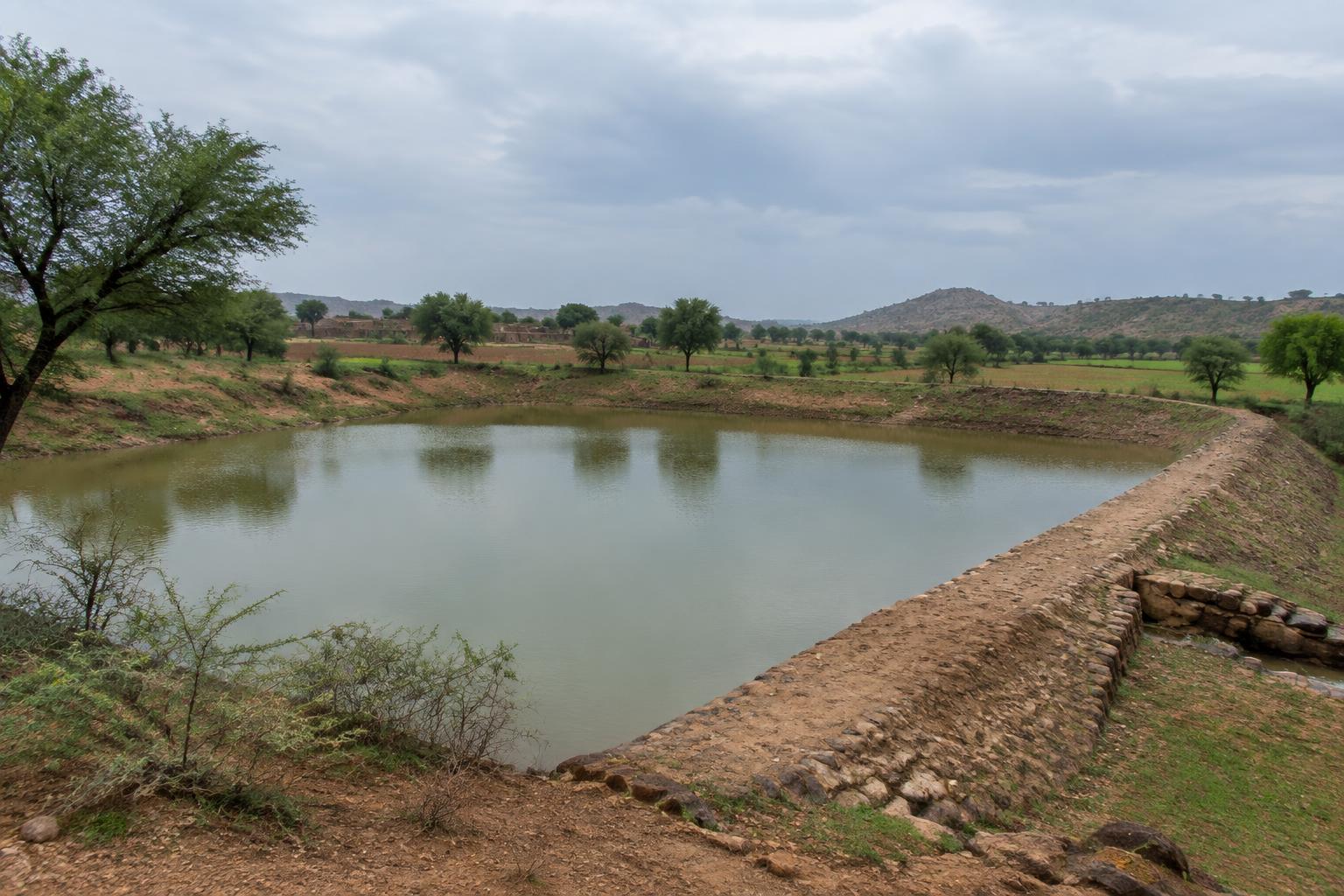
Illustrative rural johad pond and earthen embankment

Illustrative reconstruction · generated for this archive prototype

02 · North India

Johads

Capture monsoon runoff behind an earthen bund to store water and encourage infiltration.

Climate & landscapeSemi-arid village catchments · Semi-arid village catchments
Water sourceSeasonal rainfall and runoff
Main purposeGroundwater recharge
Construction / materialEarth and local stone

How it works

Capturemonsoonrunoffbehindanearthenbundtostorewaterandencourage
Community dimension
Their upkeep has often depended on collective decisions about catchment, grazing, silt and water use.
Modern relevance
A low-energy approach to slowing runoff and replenishing local water cycles.
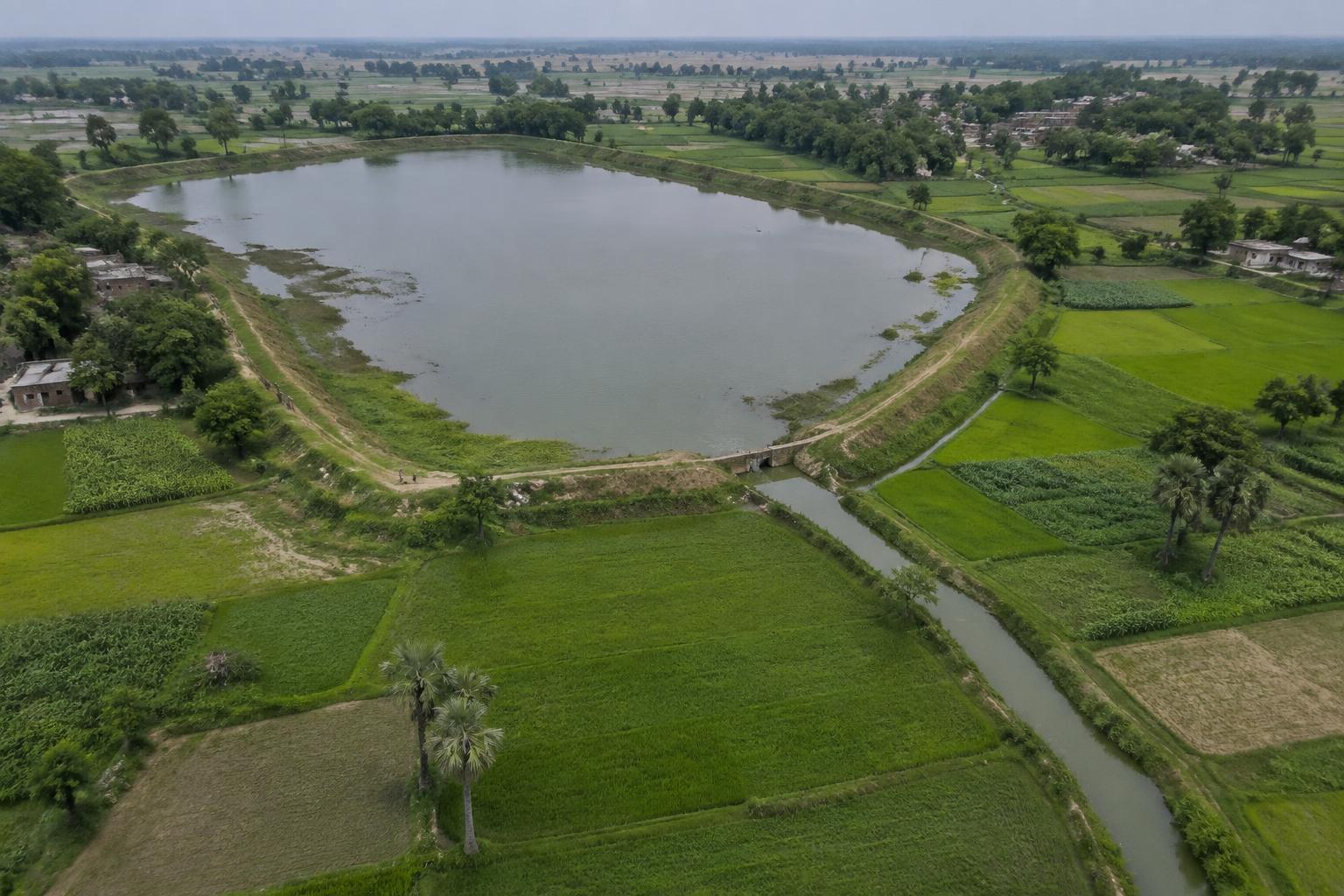
Illustrative aerial view of a reservoir and field channels

Illustrative reconstruction · generated for this archive prototype

03 · East India

Ahar-Pyne

Guide seasonal floodwater through channels into embanked storage and agricultural land.

Climate & landscapeLow-gradient agricultural plains · Low-gradient agricultural plains
Water sourceSeasonal floodwater and runoff
Main purposeIrrigation & floodwater management
Construction / materialEarth

How it works

Guideseasonalfloodwaterthroughchannelsintoembankedstorageandagriculturalland.
Community dimension
Water distribution and desilting depend on coordination among cultivators and settlements.
Modern relevance
Suggests ways to work with seasonal floods rather than treating all floodwater only as a hazard.
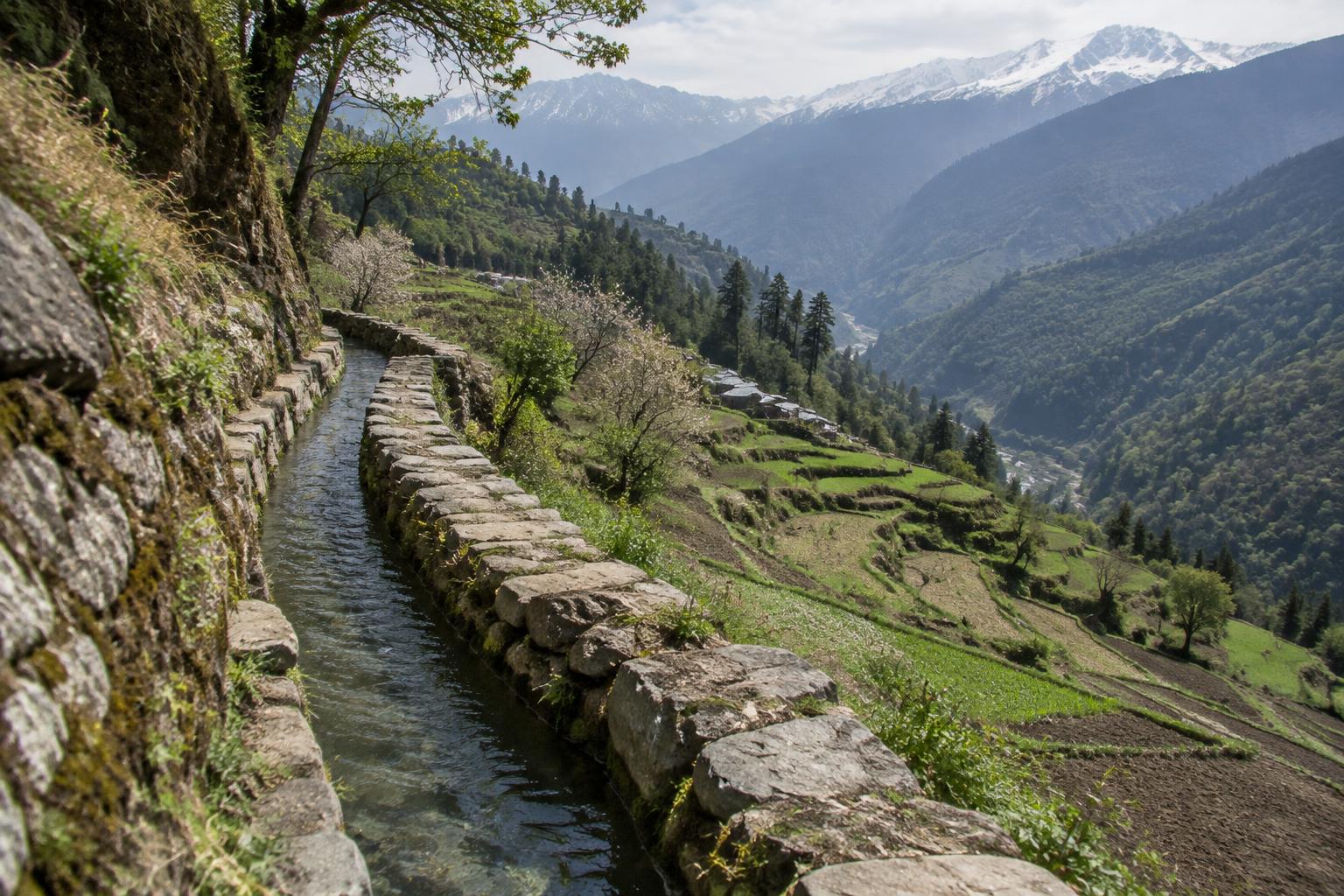
Illustrative stone-lined water channel on a Himalayan slope

Illustrative reconstruction · generated for this archive prototype

04 · Himalayan Region

Kuhls

Use gravity and contour-aligned channels to distribute mountain water.

Climate & landscapeMountain slopes and terraces · Mountain slopes and terraces
Water sourceMountain streams and snowmelt
Main purposeIrrigation
Construction / materialEarth, stone and local lining

How it works

Usegravityandcontour-alignedchannelstodistributemountainwater.
Community dimension
Shared rules and maintenance traditions support distribution among fields; arrangements differ between communities.
Modern relevance
Demonstrates low-energy distribution built around close knowledge of terrain.
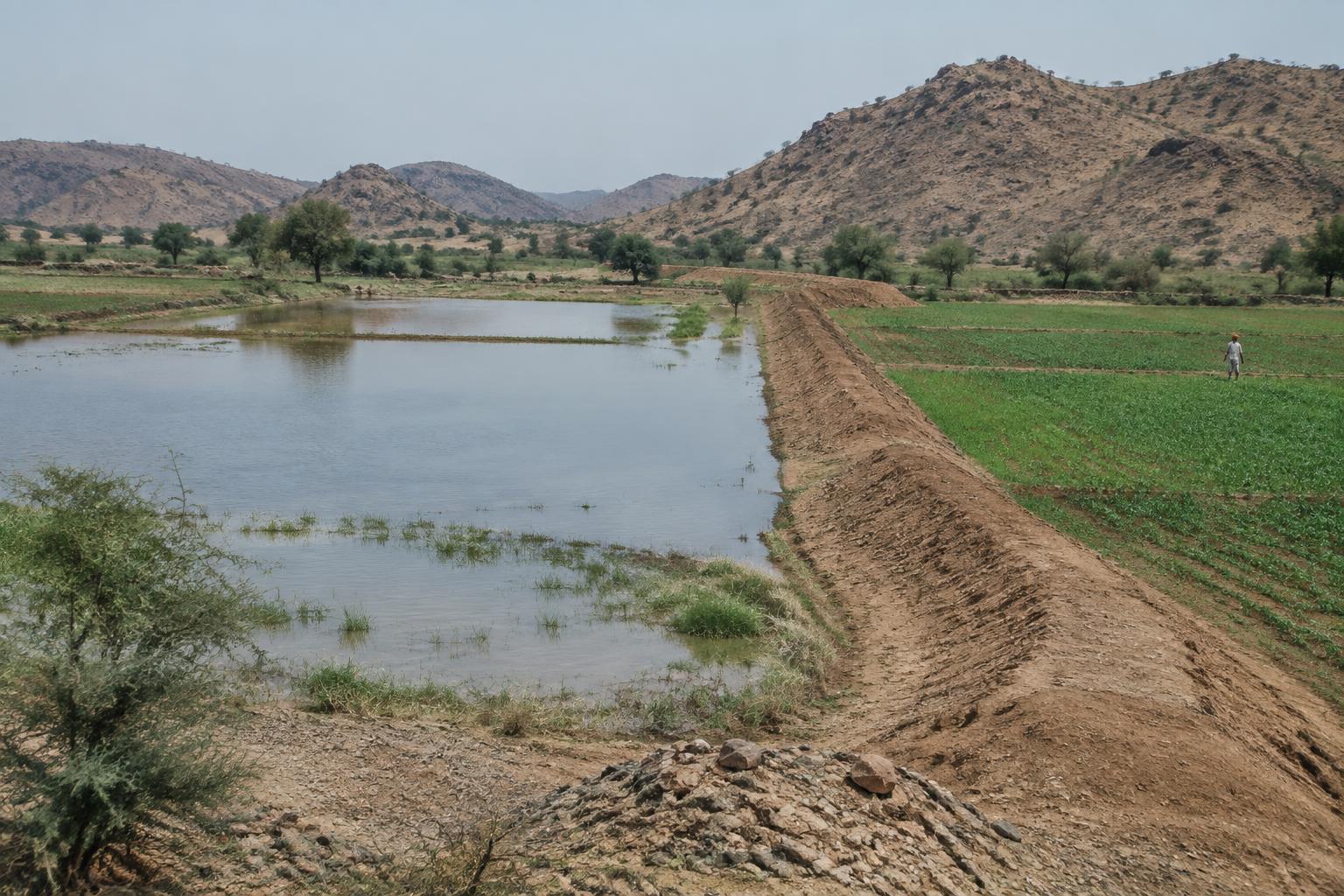
Illustrative runoff farming field divided by an earthen bund

Illustrative reconstruction · generated for this archive prototype

05 · North India

Khadin

Hold runoff over farmland so water infiltrates and leaves cultivable soil moisture.

Climate & landscapeArid rocky catchments and lower fields · Arid rocky catchments and lower fields
Water sourceMonsoon runoff
Main purposeAgriculture
Construction / materialEarth and stone

How it works

Holdrunoffoverfarmlandsowaterinfiltratesandleavescultivablesoilmoisture.
Community dimension
The system links land tenure, catchment care and agricultural timing. Practices vary locally.
Modern relevance
Shows how farming can store water in soil rather than relying only on tanks or pumps.
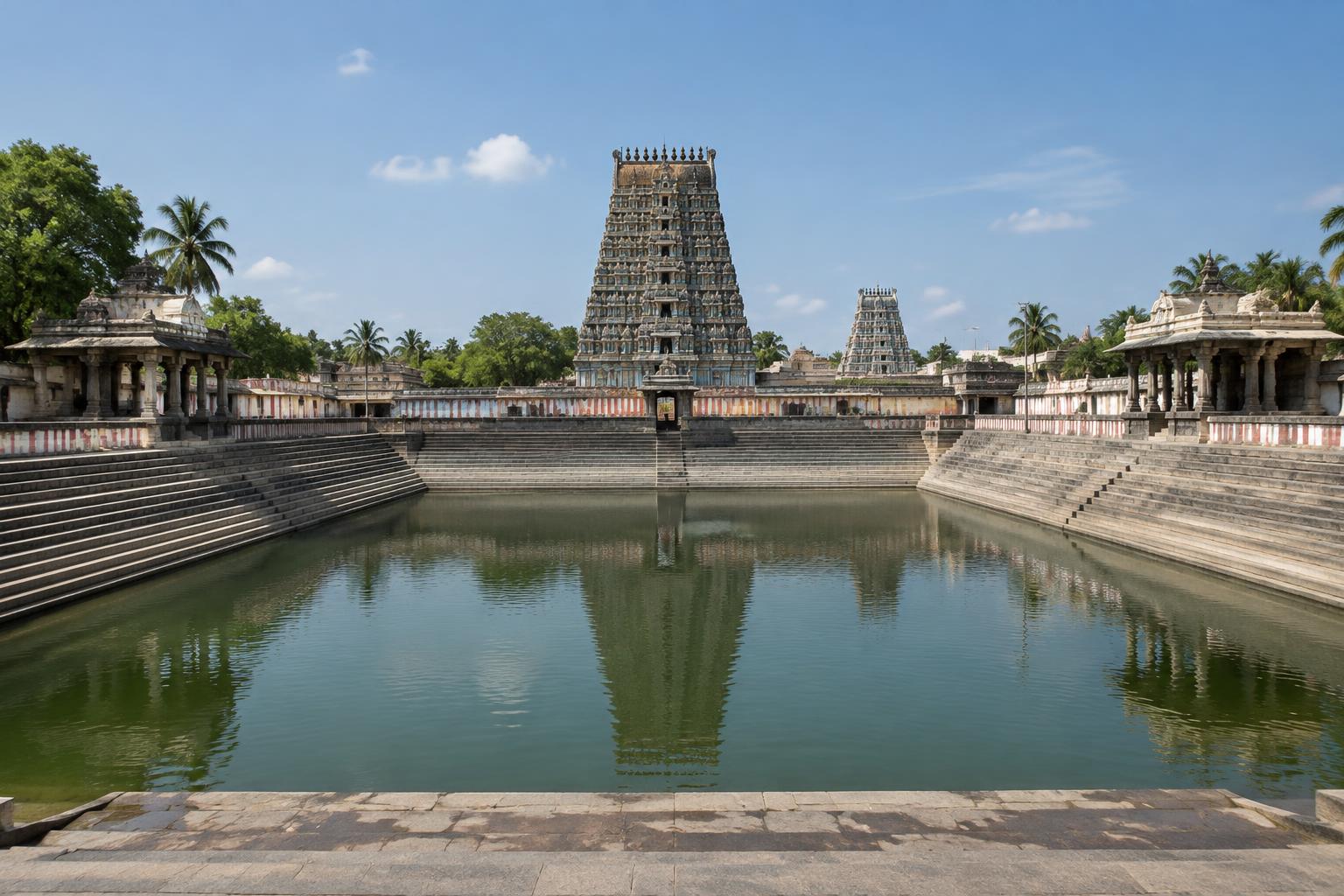
Illustrative South Indian temple tank with stepped stone edges

Illustrative reconstruction · generated for this archive prototype

06 · South India

Traditional Temple Tanks

Store surface water in a stepped civic basin connected to a wider settlement landscape.

Climate & landscapeTemple settlements and urban fabric · Temple settlements and urban fabric
Water sourceRainfall, runoff and linked channels
Main purposeCommunity, ritual & water storage
Construction / materialStone and earth

How it works

Storesurfacewaterinasteppedcivicbasinconnectedtoawider
Community dimension
They may support ritual calendars and shared public life alongside practical water functions.
Modern relevance
Highlights the potential of visible public water storage within dense settlements.

Compare strategies

One Country. Many Water Strategies.

Choose three systems to compare their context, construction and continuing relevance.

Comparison of three traditional Indian water systems
Comparison field
RegionWest IndiaNorth IndiaNorth India
ClimateSemi-arid alluvial plainSemi-arid village catchmentsArid rocky catchments and lower fields
LandscapeSemi-arid alluvial plainSemi-arid village catchmentsArid rocky catchments and lower fields
Water sourceGroundwater and seasonal rechargeSeasonal rainfall and runoffMonsoon runoff
Main purposeWater storage & accessGroundwater rechargeAgriculture
ConstructionStoneEarth and local stoneEarth and stone
Working principleVertical access to groundwater through a descending architectural sequence.Capture monsoon runoff behind an earthen bund to store water and encourage infiltration.Hold runoff over farmland so water infiltrates and leaves cultivable soil moisture.
Community roleStepwells could support gathering, rest and ritual alongside practical water access. The sculptural programme at Rani-ki-Vav gives the structure exceptional cultural and architectural importance.Their upkeep has often depended on collective decisions about catchment, grazing, silt and water use.The system links land tenure, catchment care and agricultural timing. Practices vary locally.
ScaleRequires field/source verificationRequires field/source verificationRequires field/source verification
Modern relevanceOffers lessons in climate-responsive public architecture and the cultural value of water infrastructure.A low-energy approach to slowing runoff and replenishing local water cycles.Shows how farming can store water in soil rather than relying only on tanks or pumps.