Johads
Rajasthan–Haryana region · Long-standing community practice
Illustrative reconstruction · generated for this archive prototype
Overview
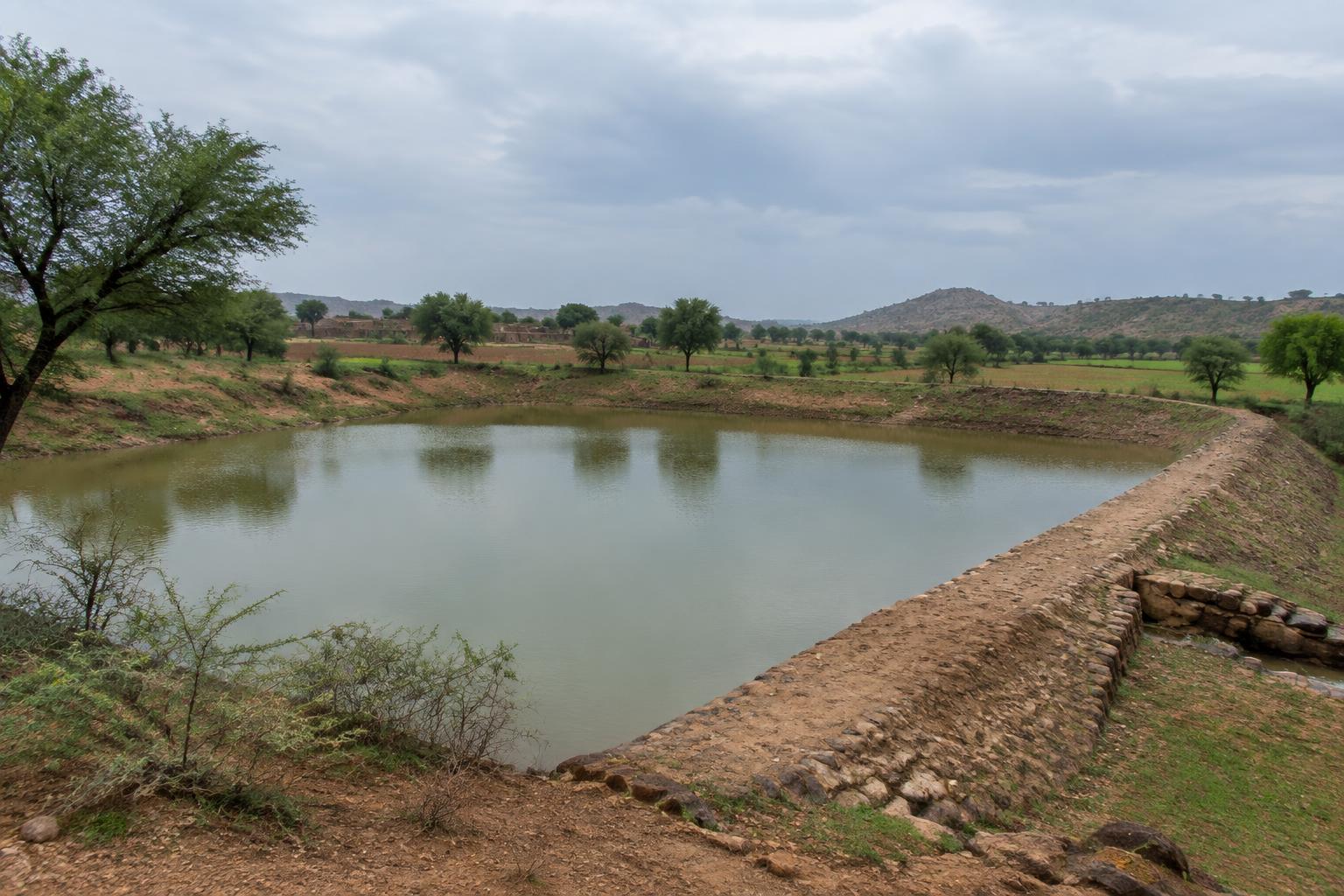
Johad is a broad regional term for small earthen water-harvesting structures. Forms vary by catchment, soil, rainfall and community practice.
Historical Context
Long-standing community practice. This prototype provides broad context only; detailed chronology requires source verification.
Water Management
Runoff is slowed behind an embankment. Stored water can infiltrate soil, support nearby wells and remain available for local uses depending on conditions.
Landscape & Ecology
Semi-arid village catchments. Represents landscape-scale, community-managed rainwater harvesting adapted to semi-arid terrain.
Architecture / Engineering
Johads are landscape works rather than monumental buildings: a bund, spillway and carefully chosen catchment relationship form the core system.
Community & Cultural Significance
Their upkeep has often depended on collective decisions about catchment, grazing, silt and water use.
Modern Relevance
A low-energy approach to slowing runoff and replenishing local water cycles.
Conservation
Effectiveness depends on an intact catchment and maintenance. Site-specific claims require local survey.